Sunday, 9 April 2023

From Istanbul to India: Fighting Gender-Based Violence

Image source

India is unsafe for women. It’s one of those self-evident statements that we’ve all heard, accepted, even propounded without much thought. But today, let’s pause to think about it. What makes an Indian woman more vulnerable to violence than women elsewhere across the globe? What does Indian law around gender-based violence lack when compared to international policies?

To make any comparison, we have to select a suitable standard. While the world has witnessed numerous multilateral attempts to bridge the gap between genders, uplift women, and promote an equitable global society, the Istanbul Convention stands out from among them. This document, negotiated by the 47 member states of the Council of Europe (COE), aims to eliminate gender-based violence in particular, and “create a Europe free from violence against women and domestic violence.” As it deals with a specific subset of discrimination, this Convention on Preventing and Combating Violence against Women and Domestic Violence cannot be objectively compared to blanket documents like the United Nations’ CEDAW or the Beijing Declaration. Fortunately, we can compare it to India’s legislation around gender-based violence. How are the two similar? Where do they differ? And what can each learn from the other?

What is a convention anyway?

Let’s begin with an introduction to the concept of a convention. A convention is an agreement between multiple states which, unlike resolutions or declarations, is legally binding. States not only sign, but ratify a convention, thereby consenting to be bound by its principles.

A convention is not, however, synonymous with a law. A convention merely lays down broad guidelines, which states can then implement in the form of relevant legislation. This must be kept in mind when comparing the provisions of the Istanbul Convention to their parallels in Indian law.

Indian law around gender-based violence

Under Indian law, the multifaceted matter of violence against women is dealt with in multiple documents. These include the Indian Penal Code, as well as more specific legislation like the Protection of Women from Domestic Violence Act of 2005 and The Immoral Traffic (Prevention) Act of 1956. The above laws are all substantive, i.e., directly defining both the rights and obligations of citizens as well as related crimes and their remedies, rather than procedural. They also deal with violence against women in particular, rather than women’s rights in general. (In this article, I will be focusing only on that subset of gender-based discrimination.)

Finally, note that these laws apply to India, a developing nation with a population that recently became the world’s highest, while the Istanbul Convention was drafted from the lens of richer, ‘first-world’ countries with populations comparable to those of our cities. Having established this context, let’s continue to the crux of this article: comparing Indian law to the Istanbul Convention.

The Istanbul Convention involves four key aspects: prevention, protection, prosecution and coordinated policies.

Prevention

Let’s begin with prevention. Governments bound by the Istanbul Convention must:

- train professionals in contact with victims,

- regularly run awareness-raising campaigns,

- include issues like gender equality and conflict resolution in teaching material,

- set up treatment programmes for perpetrators of domestic violence and sex offenders,

- work closely with NGOs with similar goals,

- and involve the media and private sector in promoting gender equality.

What preventive measures does India take against gender-based violence?

- Programmes like the Rashtriya Mahila Kosh, Swashkti project, Swayamsidha Project, and the Support to Training and Employment Programme are aimed at the socioeconomic empowerment of downtrodden women. These are based on the principle that women who are self-sufficient and independent of their abusers can free themselves from the cycle of domestic violence.

- Our government also educates underprivileged women on these issues through literacy and legal awareness schemes.

- Further, the Indian government cooperates with NGOs like Majlis Manch and Prerana working to empower women against male violence.

Clearly, Indian law dealing with prevention of violence against women is on par with the Istanbul Convention’s provisions on the same subject. One marked distinction, though, is the lack of rehabilitation for perpetrators of gender-based violence in India. In India, sex offenders are seen as monsters, undeserving of second chances. But what if this mindset, which prevents their rehabilitation, harms not just criminals but the society around them as well? Recent research suggests that offence-focused psychological treatment of sex offenders is effective in reducing both sexual and general reoffending. Rehabilitation of sex offenders could prevent their recidivism, reducing the likelihood of their victimising more women in the future. Perhaps it’s time for Indian legislators, therefore, to reevaluate their stance on rehabilitation as a preventive measure.

Another aspect that must be addressed is the monitoring and evaluation of already-existing preventive measures. In fact, the Rajya Sabha has even commented on the lack of information regarding the results of the Rashtriya Mahila Kosh: “Now more than 25 years have gone by, the Committee is not aware whether the Ministry has ever carried out any impact study or assessment concerning RMK. The Committee wishes that the Ministry should conduct an impact study/assessment of the RMK with regard to its efficiency; the extent to which it has been successful in meeting the desired goals; whether it could reach out to the intended beneficiaries across the country.”

Putting in place mechanisms to monitor and evaluate our preventive measures is just as vital to their success as establishing these measures in the first place.

Protection

The next pillar of the Istanbul Convention is protection. The convention urges that all victims of gender-based violence have access to clear and comprehensible information on available services. These services must include free, state-wide helplines operating at all hours, as well as easily accessible shelters and rape crisis centres.

In India:

- Victims can easily access services from domestic violence intervention to legal aid through the helplines available on the National Commission for Women’s website. Not only this statutory body, but multiple NGOs, too, put forth their own helplines for women in need.

- As for women’s shelters, the Ministry of Women and Child Development introduced the Swadhar scheme in 2001. With 318 Swadhar Shelter Homes across the country, the scheme provides victims with the primary requirements of temporary shelter, food, clothing and medical facilities.

- Additionally, Swadhar offers counselling, vocational training and legal aid to help women rebuild their lives.

Prosecution

What about prosecution? The convention defines and criminalises various types of violence against women. Ratifying states must now introduce new offences where they do not currently exist. Examples of such offences include:

- stalking,

- female genital mutilation,

- forced marriage,

- forced abortion,

- and forced sterilisation.

Furthermore, states must ensure that culture and tradition are not used to justify any of the aforementioned actions.

While most of the offences above are dealt with in our penal code, forced sterilisation remains a menace to India’s female population. These generally government-mandated operations are carried out on women of the lowest social strata in mass sterilisation camps with negligent doctors, unclean equipment and expired drugs, resulting in severe medical complications including death.

In 2014, for example, about 140 women were taken to sterilisation camps in Bilaspur, the largest of which sterilised 83 women within four hours. 13 women were killed and many more hospitalised as a consequence. Despite numerous such tragedies, the Indian government has neglected to introduce any definite law against forced sterilisation.

When it comes to the cultural justification of violence against women, India is a mixed bag. On one hand, India has taken strides in the protection of women by abolishing customs like Sati and the payment of dowry. On the other, a crime as heinous as marital rape goes unpunished as its criminalisation will supposedly “destabilise the institution of marriage” in India. Transgressions like marital rape must be recognised as the gross human rights violations they are before any action can be taken against them.

Integrated Policy Making

The final component of the Istanbul Convention is integrated policy making. The Convention advises lawmakers to involve law enforcement agencies, the judiciary, NGOs, child protection agencies and other appropriate partners in combating violence against women. This practice is being incorporated into the working of the Council of Europe’s member governments, as well as India’s.

Implementation on the ground

On paper, Indian laws surrounding gender-based violence aren’t that far behind their counterparts in the Istanbul Convention. So why the disparity in the actual implementation of such laws? Why is India considered so much more dangerous for women?

Part of this lack of safety stems from the ubiquitous root of almost every other nationwide issue: too many people sharing too few resources. The high population density of urban areas leads to overcrowding and a deficit of space, making women vulnerable to harassment and assault. This can often deter women from accessing public spaces altogether. Resources under strain from overpopulation barely reach rural areas, where the absence of basic amenities like sanitation endangers women. The absence of education, meanwhile, obstructs them from ever progressing past this danger. India’s judicial system is overburdened and inefficient, frequently delaying, and therefore denying, female victims their justice. Other problems like India’s deeply-rooted patriarchal attitudes and women’s economic dependence only serve to exacerbate the issue.

But while India definitely isn’t heaven for women, can some part of its hellish image be attributed to mere perception? A 2018 survey that ranked India as the world’s most dangerous country for women, skipping right over war-torn Syria and oppressive Saudi Arabia, was quickly exposed as fallacious. And this survey was conducted by none other than the widely-trusted Thomson Reuters Foundation! Rather than taking any data into account, the study relied wholly on the opinions of 548 anonymous experts. While it naturally does not provide legitimate information about the actual state of women in India, it does give us a valuable insight into the world’s perception of it.

To armchair academics who have never ventured into India, it may seem like a primitive place where women in saris toil away in servitude, not daring to open their mouths for fear of attack, with elephants roaming around in the background all the while. But the new India is nothing like that! Slowly but surely, we are making progress towards women’s empowerment alongside the rest of the world, including our friends in Europe. Indian women enjoy benefits like liberal abortion laws, generous maternity leave policies, and rights to residence in cases of domestic violence, which millions of women in more developed countries are denied.

When I began writing this blog, I myself believed I would find Indian law woefully lacking in comparison to the Istanbul Convention (I am going to blame my bias on those 548 anonymous experts). I stand corrected. India’s legislation around gender-based violence is nearly on par with the COE’s, and each has its own unique merits. More power to both!

Tuesday, 10 January 2023

O Captain! My Captain!: India’s 2039 Prime Minister

What if I told you I can predict who will be leading our country 17 years from now? The future Prime Minister is a man you’ve all heard of, albeit never in this capacity: former captain of the Indian men’s national cricket team, MS Dhoni. But how can I be so sure that Dhoni has what it takes to be our Prime Minister? Let me elaborate.

The Scoreboard

First, let’s find out: what does it take to win the position of Prime Minister of India?

The data of the 2019 Lok Sabha election shows that out of an eligible voting population of 880 million, only 612 million people actually voted. Further, the winning party (BJP) won just 37.7% of the latter number, or 231 million votes. In 2019, that was approximately the population of a single state, Uttar Pradesh, alone.

In India, states are divided into constituencies, each constituency corresponding to one seat within the Lok Sabha. Therefore, the party which wins the highest number of constituencies effectively gains control of the central government. Under this system, with just around 231 million votes across constituencies, the BJP now occupies 303, or 55%, of the 543 Lok Sabha seats. Therefore, the winning party of a general election need not have the support of the majority of India’s eligible voting population; just that of a moderately large minority of the actual voting population. To win an Indian national election, a party needs only 231 out of 1400 million, that is, 16% of the nation’s entire population to vote for it!

But while this data gives us an idea of the quantitative requirements to win an election, what about the qualitative ones? What qualities must a candidate aspiring to be Prime Minister possess himself?

The Player

Image source

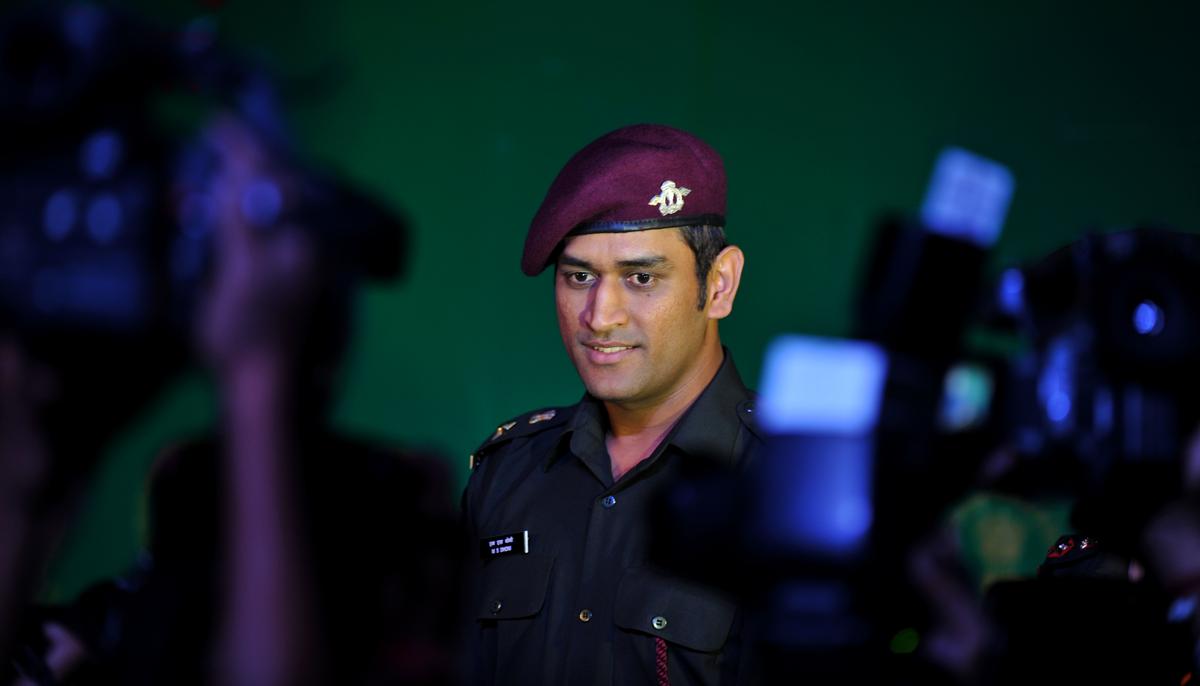
First, there are the virtues expected of any leader - integrity, humility and prudence - which MS Dhoni has exhibited time and time again throughout his cricketing career. Dhoni himself once said, “leadership is the capacity to translate vision into reality”: the capacity this ex-captain has demonstrated time and time again.

From selecting spinners to bowl in a historic tie-breaker against Pakistan during the 2007 ICC Men’s T20 World Cup, to promoting Rohit Sharma as an opener during the 2013 ICC Champions Trophy, Dhoni’s unusual yet ultimately ingenious decisions have led his team to numerous victories.

But this flair for leadership, though necessary, isn’t the only prerequisite to ruling a country. (After all, as our dear neighbour has proven, a successful cricket captain does not always make for a good Prime Minister!)

For Dhoni to stand a chance at prime ministership, the Indian population must see him not only as a successful sports captain, but as a capable politician as well. This begs the question: does Dhoni’s public image fit into that of a future Prime Minister?

I argue that it does.

Dhoni hasn’t proven his patriotism just by representing our country in the cricket stadium. After training with the Paratrooper Regiment for a month in 2019, Dhoni spent a few weeks the year after patrolling and performing guard and post duty in the then hazardous region of Kashmir. Photographs of his brief military stint are now plastered across the Internet. Coincidence? Or the greatest of this captain’s strategies so far?

Dhoni’s reputation also remains happily untarnished by any personal scandals or discredit to his character. His clean, inspiring image will win him the public’s support in his political career.

The All-Rounder

While these advantages alone might stand him in good stead for Prime Ministership, Dhoni also wields the power of representing multiple majorities. Hailing from Jharkhand, Dhoni naturally appeals to the highly populated Hindi-speaking belt of North India. The states and union territories whose official language is Hindi together consist of 226 constituencies, which translate to 40% of the seats in the Lok Sabha (including those reserved for Scheduled Castes and Tribes).

Further, could Dhoni be the first Hindi-speaking candidate to break the barrier of the south? Having captained the Chennai Super Kings to four Indian Premier League titles, Dhoni has won the admiration of a considerable section of the Tamil population. If he plays his cards right, this admiration may win him at least a handful of Tamil Nadu’s 39 constituencies, thereby setting him up as a Pan-Indian candidate.

Not only does Dhoni come from a linguistic majority, but a religious one, too. Of India’s fourteen Prime Ministers since independence, only one (Manmohan Singh) has been non-Hindu. Say what you will about secularism, but being a Hindu in a Hindu-majority country does prove an advantage when running for public office.

Similarly, only one (Indira Gandhi) of these fourteen past Prime Ministers has been female. In fact, our current Lok Sabha has the highest percentage of female MPs ever elected, at a mere 14.4%. Belonging to the dominating gender will make rising through the ranks in the political profession far easier for Dhoni.

Now that we’ve analysed the assets Dhoni already wields, what more does he need to run for Prime Minister?

An independent candidate has never become Prime Minister of India before, so it’s safe to assume that Dhoni will need to be backed by a party. But which national party is Dhoni most likely to join?

Team Selection

While Dhoni has never broken his silence on politics in the public forum, speculation about his affiliation with the BJP swirls regularly across the internet. Just last November, an image of Dhoni shaking hands with Amit Shah at an India Cements event went viral. More significantly, multiple BJP members have publicly praised Dhoni and recommended his transition into politics. For example, Subramanian Swamy, presently a member of the Rajya Sabha, stated in 2020: “M. S. Dhoni is retiring from Cricket but not from anything else. His talent to be able to fight against odds and his inspiring leadership of a team that he has demonstrated in cricket is needed in public life. He should fight in LS General Elections in 2024.”

But while others may consider the BJP the best fit for Dhoni, why should this party appeal most to him?

Let’s consider his other options.

The BJP’s leading competition, the Indian National Congress, has notoriously been dominated by the Gandhi family since independence. The party’s current president, Mapanna Mallikarjun Kharge, is only the sixth to take up this mantle through a democratic intra-party election, and the first non-Gandhi to do so in the last 24 years. While the Congress categorically refuses to name its prime ministerial candidate before polls, it’s safe to assume that the next will be someone with close ties to the Gandhi family, if not Rahul Gandhi himself. These exclusionary tendencies make it tough for an outsider to thrive within the Congress party.

Moreover, the present may be the least favourable time to join the Congress, which has been in a state of decline since its worst-ever performance in the 2014 national election, followed by a merely marginally better show in 2019.

So which other party could Dhoni potentially enter?

After the BJP and Congress, the party with the highest number of seats in parliament is the All India Trinamool Congress, headed by Mamta Banerjee. The party’s stronghold is in West Bengal, but even within this state, it has suffered severe losses to the BJP in recent years. Outside West Bengal, the party’s presence has diminished so greatly as to call its status as a national party into question after the 2019 election. Essentially, this party does not have the Pan-Indian quality required for its candidate to have a real shot at prime ministership.

The Aam Aadmi Party, while the new kid on the block, is making waves in Indian politics. Could Dhoni emerge as a national leader as the AAP emerges as a national party? Unfortunately, the AAP’s brand appears to be dominated by its original founder and current leader, Arvind Kejriwal. Kejriwal is as unlikely to tolerate a leader more popular than him as Dhoni is to play second fiddle to Kejriwal.

By sheer process of elimination, it makes the most sense for MS Dhoni to join the BJP. Assuming that Dhoni does join this party, what must he do next in order to be its prime ministerial candidate by 2039?

Team Dynamics

To prove himself within the party, Dhoni will have to work his way up from the grassroots like so many of its past leaders, from the respected Atal Bihari Vajpayee to our Prime Minister Modi himself. He can begin by representing an underdeveloped BJP constituency and demonstrating his ability to create change there. With the level of fame he commands, even small steps in the forward direction could be magnified to massive, prime ministerial proportions in the public eye.

He can also aspire for a prominent role in the Union Council of Ministers. This doesn’t necessarily have to be the Minister of Youth Affairs and Sports: just any position in which he can promote real, and more importantly, visible progress.

Finally, Dhoni must run for election to a state legislative assembly, or even the Lok Sabha. Running for a seat in the Lok Sabha directly would eliminate the possibility of competition from smaller state parties, and running from a constituency where the BJP is already well-established would further boost Dhoni’s chances. He can run from his home constituency, Ranchi, which is already under BJP rule. While the BJP won 43% of this constituency’s votes in the 2014 general elections, its presence rose to 57% in 2019.

If he can then show tangible development in this backward, yet resource-rich part of Jharkhand, Dhoni will be guaranteed the support of millions’ but more importantly that of Amit Shah and Prime Minister Modi in his future political endeavours.

Required Run Rate

If Dhoni has passed all these checkpoints by 2039, while maintaining his strong connection with the Indian population and forging new ones with higher-ups in the BJP, he will prove a worthy successor to Prime Minister Modi.

But can he win a national election?

Let’s assume the BJP retains its current share (303) of Lok Sabha seats. Now, add to this the votes that Dhoni himself will draw to the BJP. We can suppose that Dhoni will win the BJP the two Jharkhand constituencies it lost to the UPA alliance in 2019. Bihar, meanwhile, has 40 Lok Sabha constituencies. Again, Dhoni can win a significant portion of the seats lost to the Janata Dal and Lok Janshakti Party, say 11 of the 22.

While Tamil Nadu’s 39 constituencies are historically dominated by the DMK and AIADMK, let’s assume that Dhoni manages to win four more seats from this state. Let’s also say that Dhoni takes away four additional constituencies from the diminishing AITC influence in West Bengal. Under these conditions, the BJP will win 324 of 543, or 60% of Lok Sabha seats in 2039, paving a blazing path for Dhoni’s role as Prime Minister.

The Commentary Box

While Dhoni has miles to go to achieve prime ministership, all you have to do is leave me a comment sharing your opinion on my prediction.

Meanwhile, I will send this article to MS Dhoni requesting his response (along with many humble compliments: after all, I’d better get into the good books of our future Prime Minister!) and will let you know as soon as I hear back from him.

Don’t forget to return to this article 17 years from now, when I am (hopefully) proven right!

Saturday, 3 September 2022

Police Encounters: Justice Served or Justice Denied?

Image source:https://www.deccanherald.com/specials/insight/goonda-raj-turns-encounter-raj-in-uttar-pradesh-759857.html

On the evening of November 17, 2019, a veterinary doctor, Disha, left home for her clinic in Gachibowli, Telangana. After parking her motorcycle near a toll plaza, she travelled the rest of the distance by cab. When she returned to find the rear tyre of her motorcycle punctured, she called her sister to explain that she had accepted the help of some truck workers to fix the problem. Six minutes later, the call was cut. The woman’s phone was switched off. A week later, her body was recovered, raped and burnt, from an underpass on National Highway 44.

When the police took four suspects into custody the next day, the public expected a long-drawn out trial hampered by bureaucracy and corruption, justice delayed and therefore denied. But justice, if it can be called that, was served much sooner. On December 6, the police disclosed the result of a “reenactment” of the crime conducted at Chatanpally: an altercation during which ten policemen killed all four suspects.

While the people of Telangana hailed the police as heroes for ridding the state of these alleged rapists, a Supreme Court-appointed inquiry into the killing yielded different opinions this May. The (Sirpukar) commission reported that the police’s assertion that they had fired in self-defence after the accused tried to escape was “unbelievable, and not backed by evidence” and recommended that the ten policemen present be tried for murder.

The situation as it stands today rekindles a debate that simmers only in the hearths of Indian homes: that of the morality of a fake encounter. So let’s settle this dispute by using the aforementioned example and asking ourselves these questions: why do fake encounters take place? What are their consequences, positive and negative? What consequences would arise from their absence? And together, our answers should tell us - is an encounter case ever justified?

Let’s start simply, with the why of the scenario. If anything about this case is clear-cut, it’s that the suspects were shot because they raped and murdered another human being. Under the reasonable assumption that they were guilty of this crime, what punishment did they deserve?

According to Section 302 of the Indian Penal Code, a murder must check off the three factors (intention to cause death, knowledge that the act may cause the death of another, and intent to cause such bodily injury as is likely to cause death) to warrant life imprisonment, and possibly even the death penalty at the court’s discretion. Combined with the rape of their victim, a crime so outrageous would undoubtedly have been punished with death… if the criminals weren’t minors.

Three out of the four rapists being children, two of them only 15 years old, their sentence would likely be much milder. Take the Nirbhaya case, when a 23-year-old woman died after five adult men and a minor brutally raped her in a bus in 2012. Four of the adults were sentenced to death, the fifth having died in prison, but the minor? Being 17 at the time, he was released after a mere three year stint in jail. The Juvenile Justice Act has since been modified, allowing for 16 to 18-year-olds charged with Heinous Offences to be tried as adults. Of course, this wouldn’t have made a difference to the fate of the two previously discussed 15-year-old delinquents.

While you and I undoubtedly want all four of these monsters to die a thousand deaths, we must resign ourselves to the fact that the punishment they received was harsher than at least two of them legally deserved.

So why did ten ordinary policemen feel the need to take such drastic action? “The Sirpurkar Commission is categorical that their actions have the stamp of approval of the government,” reports The Wire. “The legally puerile tactics they adopted in producing, manipulating and frustrating the process of inquiry reflect this approval.” The policemen had nothing to gain from an encounter killing; in all likelihood, they staged one under pressure from a local politician. Perhaps this politician had enough influence over lower courts to protect the policemen from sentencing there. But however flawed this debate may prove our justice system to be, our Supreme Court remains beyond the reach of bribery or extortion: once the case escalated to the notice of our highest tribunal, the politician likely cut their losses and left ten misguided policemen to the bleak fate they face today. All that mattered to the politician, anyway, was the temporary appeasement of their voting population, the Telangana public: because the Telangana public was apoplectic.

In 2020, Telangana reported the highest number of atrocities against women among the southern states. In 2021, the state’s rape rate shot up by 23%; and this count includes only the few reported incidents. The people’s fear and frustration culminated after the Disha case, with schoolgirls and elderly women alike flooding the streets to protest with the fervour of a people long denied justice and ready to fight for it.

If not for the police encounter, though, would they have received it?

Likely not. Data released by the National Crime Records Bureau of India (NCRB) in 2020 showed that over 75% of cases involving crimes against women in Telangana were still pending trial. Another 10,000 from the previous year were awaiting a mere preliminary investigation. The public’s response may have temporarily placed the Disha case under a spotlight, but this light would have soon faded with the next case of male violence, swallowed up by a new wave of victims screaming in vain for justice. And so, in the only plausible turn of events in which Disha’s assault would be avenged, the police took matters into their own hands.

While few may care for the rapists whom they killed, this event’s consequences reach further than the deaths of four brutes. The policemen’s ability to shoot four suspects dead in broad daylight, and their belief that they could get away with it, is evidence of a broader problem India faces. Across the country, members of the police force have repeatedly been driven by our overburdened, understaffed and consequently inefficient law system to administer justice themselves. Daya Nayak, Prafule Bhosale, Pradeep Sharma: these men have become household names for their proficiency in carrying out and covering up extrajudicial killings. “So what?” A regular Indian might ask. “Why should we stop them from providing justice to victims and preventing further victimisation of civilians?”

Because when we let a falsified encounter slide, we allow an ordinary person to play god. We give extra-human power to someone with very human flaws. How long until these flaws lead them to abuse their power? Take Sachin Vaze, for one. Assistant Police Inspector in the Mumbai Police, he played a role in the deaths of 63 alleged criminals through encounter cases. He was suspended for 17 years after the custodial death of Khwaja Yunus, but granted bail and reinstated in 2017. In 2021, he was dismissed permanently from the police force, this time for his involvement in the Antilla Bomb Scare and the murder of Mansukh Hiren. Countless such examples have proved, time and time again, that encounter specialists are as dangerous a solution to crime, as crime itself.

What, then, would the proper solution to a case like Disha’s be? I hoped that by the time I got around to writing this portion of my article, I would have an answer for you. Unfortunately, hours of pondering have left me with none. My education and - albeit basic - understanding of civics teach me to look forward to the conviction and punishment of ten policemen who brazenly trespassed upon the law. But as a girl, as an Indian, as a halfway decent human being - and I am sure most of my readers will agree with me - I applaud our police’s actions and pray that they do not face their consequences. I celebrate the deaths of four rapists, and hope that they burn in hell.

Monday, 8 August 2022

Shame, Shame, Period Shame

Source: https://www.theperiod.co/blogs/news/5-ways-sanitary-pads-are-killing-you

The Monthly Visitor. Aunty Flo. Code Red. Girl Flu. These bewildering turns of phrase are just four of the 5000 different euphemisms used across the globe in lieu of the word “period”. While this habit may surprise you, it’s merely the tip of the iceberg of efforts taken by society to dismiss and conceal the perfectly natural phenomenon of menstruation. In the Asembo community in Kenya, menstruating girls are considered unclean and forbidden from sleeping in their mothers’ homes. In India, 71% of adolescent girls are unaware of menstruation altogether until they experience it themselves. And as soon as they do, they are likely to be “excluded from social events, denied entry into temples and shrines and even kept out of kitchens,” according to a BBC News report. Even in a first-world country like the USA, a 2018 poll found that 42% of women had experienced period shaming, one in five by their own male friends.

But why are periods considered so shameful? After all, aren’t they a regular biological function undergone by almost an entire half of the world’s population? Perhaps the answer lies within that question itself; this half of the population, the female half, is the same one that has been excluded, disregarded and denied since time immemorial. If it were men who menstruated rather than women, wrote Gloria Steinem, “menstruation would become an enviable, worthy, masculine event: Men would brag about how long and how much.” Perhaps period shaming is just another way our patriarchal civilisation maintains control over females, preserving their place below males by condemning them for a process integral to their bodies.

And if you think the ramifications of this hackneyed idea extend only as far as the theoretical social status of women, think again! Period stigma manifests as a plethora of tangible problems. High taxation on products like pads and tampons (while less essential male purchases like erectile dysfunction pills often remain untaxed) hinders women in nations around the world from maintaining basic menstrual hygiene. The poorer they are, the more likely these taxes are to result in period poverty, an absolute lack of menstrual hygiene. The absence of menstrual products and education further impacts women financially by forcing them to stop attending schools or workplaces during menstruation.

As for their health, they are left vulnerable to health risks like reproductive and urinary tract infections. In rural areas, their seclusion from public areas can impede access to food and water, endangering their lives. Period shame takes a toll on women’s mental health, too, causing distress and depression. In Kenya and India, this degradation has driven girls as far as suicide.

In this era of feminism and social reformation, the time is ripe to end period shame. The first step, as in all widespread change, is education. Schools must begin to teach their students, girls and boys, about menstruation, presenting it as the natural bodily function it is and thereby normalising it. Schools, colleges and workplaces must also make sanitary supplies readily available to their female members. And as individuals, you and I can bring about similar change in simple, everyday ways. Let’s discard hushed whispers of “on the rag” in favour of confident, candid conversation about menstruation. Let’s replace artificial, obliging laughter at PMS jokes with open disagreement. Let’s stop shaming periods and start shaming period shame.

Thursday, 2 June 2022

Kandahar 1999: Revenge Served Cold

New Delhi, 2021

Hunched over a desk in a third-floor office of the CGO Complex in New Delhi sits a bespectacled man, scanning the official-looking documents scattered before him. He signs page after page with a withered, unsteady hand, absent-mindedly twirling his moustache with the other. A groan of decaying wood, and someone else enters the room, yet he does not so much as glance towards the door.

“Mr Doval?” The newly-appointed secretary’s voice is low, hesitant. He barely grunts in response, eyes now roving over the minutes of a meeting he’d missed last month. “A Ms. Kaur is here to see you.”

“Tell her to come back next week.” He waves a wrinkled hand in dismissal, but his secretary stands her ground.

“She says it’s urgent, sir. She says there’s been a breakthrough in Case 418.”

At this, the distracted man finally looks up, a thousand emotions flitting across the creases of his face: shock, then disbelief, followed by a disbelieving hope, and ending with guarded curiosity. “Case 418?” He croaks. “You’re absolutely sure she said 418?”

“Yes, sir.”

He rises with a speed that belies his age and crosses the room in two swift strides. “Where can I find her?”

His assistant leads him downstairs, through a dimly lit corridor, past locked doors and narrow aisles and into a spacious hall where a woman waits alone, impatience written across her visage. As soon as she catches sight of him, she announces breathlessly, “We’ve just received a new lead on Case 418. A man: we think he’s one of the terrorists from the IC 814 hijacking. Would you like to work the case with us?”

And as National Security Advisor Ajit Doval answers in the affirmative, congratulates her profusely and pleads with her to brief him immediately, he recalls the very first time he heard of the hijacking of Flight IC 814.

*

New Delhi, 1999

They called him the “Indian James Bond” for his crafty spy work during Operation Blue Star, his daring counter-insurgency enterprise in Kashmir, his successful resolution of multiple Indian Airlines hijackings. The first police officer to be awarded the prestigious Kirti Chakra, he was bitterly envied by his peers and lavished with praise by his superiors. Only 54 years old and already the central service’s most valuable member, Ajit Doval was riding high.

That was before the hijacking.

When information that Flight IC 814 from Kathmandu was straying suspiciously from its route to Delhi first reached the Bureau, Doval was content not to be involved. It was probably just a minor mistake on the pilot’s end. Besides, on the off chance that it was a hijacking, the Crisis Management Group could handle it just fine. All they had to do was ensure that the plane stayed in Amritsar, where the quick-witted Captain Devi Sharan had landed under the guise of refuelling. But a miscommunication here, a mishap there, and suddenly, the plane had left Amritsar, left India altogether, and was off to Lahore, Pakistan.

What followed was a deluge of panic that Doval would never forget. The Intelligence Bureau, the Research and Analysis Wing, the nation itself descended into chaos. Doval began to understand the saying “no news is good news”: the more they heard of the hijacking, the more disastrous it seemed. 176 passengers and 15 crew members, held hostage in the aircraft. The terrorists’ refusal to let a single one disembark, not even when the pilot begged them to spare at least the women and children. 3 of them, or maybe 5, or perhaps even 10, with black masks and scruffy beards, threatening innocent Indians at gunpoint as they flew them all the way to Dubai.

India finally drew breath upon the release of 27 passengers at the Al Minhad Air Base, but even this momentary relief was overshadowed by far graver information: a hostage had been killed. 25-year-old Rupin Katyal, newlywed and returning from a honeymoon with his wife, stabbed brutally to death for no reason other than being in the worst possible place, at the worst possible time. How many more would die such disgraceful deaths before the government stepped in? The pressure from the hostages’ families, the media and the general public of India reached a resounding high. The time had passed for quiet data collection, for the formulation of cautious plans that would never come to fruition. The Indian government, backed into a corner by a hijacking on one end and its own population on the other, decided that negotiation was the best course of action. And they knew just the man for the job.

*

Jaisalmer, 2021

In the deserts of Jaisalmer, a long way from its golden fortified city, stands a ramshackle rest stop. Whitewashed, yet greying with dust and grime, its second floor perches precariously on the roof of the first. Its windows are nothing more than holes curtained by tarp, the wood of its door rotten and crumbling. A traveler would have to be in the pits of despair to seek shelter here.

And so the sight of India’s National Security Advisor and his equally debonair colleague entering the tumbledown structure would be a marvel - if there were anyone to see it. Thankfully, that has been taken care of by a security scan an hour prior to their arrival.

The ground floor of the building reflects its dilapidated exterior: the walls are stained a murky green, the blackened floor home to a host of creepy-crawlies and the little remaining furniture covered in a thick layer of dirt. But up the rickety staircase, the upper storey looks like it belongs to a whole other structure, a state-of-the-art campus of a multi-million-dollar corporation. These walls are whiter than a crocodile’s teeth, the seats plush, and the desks pristine. Wide screens line every wall, some displaying numbers and graphs, others live footage from the furthest corners of the country. And in the centre of the room, a group of the Indian intelligence’s best thinkers are crowded around a single computer.

As soon as Doval enters the room, their heads turn towards him like moths to a flame. After a long drawn-out pause, a young man steps forward from among them, curly-haired and shifty-eyed, chewing nervously on his lower lip. “Mr Doval, sir, we are employees of the Research and Analysis Wing. For the past 22 years, we have spent every waking moment tracking-”

“But you’ve only made real progress in the past month,” Mr Doval interrupts gruffly, “am I correct?”

“Well, it might seem that way, but really, sir, it’s the seeds sown over the last two decades that we are now reaping-”

“Alright, alright, spare me the parable.” 22 years of waiting takes its toll on a man’s patience. “How did you find him?”

“Aside from investigating the hijackers, we have been monitoring the Akhtar Colony of Karachi since 2017, when a suspected member of the JeM passed through. Turns out he was just an ordinary civilian, but by then our supervisor couldn’t be bothered to dismantle the surveillance network in the colony. We’ve had a dormant spy there, disguised as a chai vendor, for nearly four years now. We never reestablished contact with him until a few months ago, when our boss decided to move him to a nearby colony where he could prove useful. It was then that he informed us of his suspicion of Zahid Akhund, owner of Karachi’s Crescent Furniture business. He was simply too prosperous, too powerful among the colony’s residents, for a man who owned a loss-making company. And he often hosted suspicious visitors, from a squad of off-duty police officers to a trio of men in black outfits covering everything but their eyes, carrying equally dubious black briefcases. We suspected a money-laundering scheme at first, perhaps a bit of bribery, extortion. But when our spy finally procured a picture of the man… well, we realised we had someone far more valuable on our hands.”

With that, he gestures towards the computer, his crowd of colleagues spreading apart to allow Doval a glance. And upon the screen is a face Doval could recognise in disguise, in the dark, could remember were his every other memory lost. A face that brings back in full force the disappointment, the humiliation, the rage he had felt 22 years prior. A face that has haunted his every nightmare since that fateful day in 1999…

*

Kandahar, 1999

Afghanistan, the land of the Taliban. They arrived in the dead of night, a team of India’s finest: Vivek Katju, silver-tongued diplomat with eyes sharp as an eagle’s, his mind even sharper. Nehchal Sandhu, whose unflappable demeanour made him the prefect person to solve a crisis. And of course, Ajit Doval, apple of the Indian patriot’s eye.

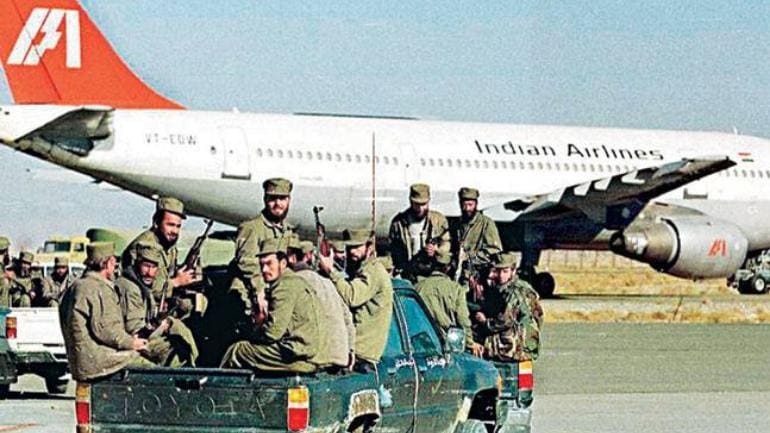
They had left in a blaze of glory, off to rescue their stranded brothers and sisters. But their bravado evaporated like drops of dew beneath the midday sun at the sight that met them in Kandahar. Flight IC 814, surrounded by Taliban gunmen armed with tanks and anti-aircraft weaponry. More than a hundred imperilled Indians within, sitting in pools of their own urine and faeces, some weeping relentlessly while others simply stared blankly ahead. A man with an angry red lash down his arm after he had lifted it to comfort his terror-stricken wife. A child with a dupatta over her mouth, tied by her own mother to muffle her cries. And looming above it all, the five hijackers, led by the dark, brooding, deadly Zahoor Mistry.

The negotiators had three objectives: to protect the Indian civilians, gain intelligence pertinent to their rescue, and buy the government time to carry out a rescue. Their hopes plummeted further upon realising that they were at a disadvantage in all three aspects. The hijackers were in no mind to yield to a group of impotent officers whose powers began and ended with talk and empty threats. They had a regular stream of supplies, from fresh food to even fresher information straight from ISI headquarters. They moved freely in and out of the aircraft, unhampered by any fear of Indian military involvement.

In a desperate attempt to turn the tables, Doval and Katju approached the Taliban for help. Beggars can’t be choosers, Katju had reasoned when Doval protested against accepting aid from militants. They need not have disputed it, because the Taliban authorities were immovable. Not only were they unwilling to act against the hijackers, but they refused to allow India to carry out a military operation on their soil.

Doval could no longer deny it: if they wanted to deliver their countrypeople home in any fit shape, the team would have to meet the terrorists midway. And thus, a real negotiation began.

“The release of all 36 men, the disinterment of Sajjad Afghani’s corpse and a grant of USD 200 million, and your people will walk free.”

From the beginning, Doval could tell that this negotiation would not be a day’s work. But the longer they delayed, the longer helpless citizens of India would be at the mercy of these madmen. Three sleepless nights of discussions, wheedling and persuading the terrorists over the wireless and frantically ideating and planning around a table with his colleagues. Finally, they managed to dramatically reduce the terrorists’ demands to the release of only three terrorists: Maulana Masood Azhar, Mushtaq Ahmed Zargar and Ahmed Omar Saeed Sheikh.

One incident stood out clearly from that terrifying abyss of a week, a moment that Doval would always recall as vividly as though it had been yesterday, as much as he wished to forget it entirely. It was the eve of December 31st, right after the Indian government and the hijackers had come to a compromise. Their enemies, satisfied with the promise of their comrades’ return, allowed him to enter the plane and speak freely to the hostages.

“You are free,” he informed them, “the Indian government has ensured your recovery. We will take you home safely and reunite you with your families.”

He had expected applause, cries of relief, even a few smiles. But it was as if the sea of faces before him did not comprehend him. They continued to look towards the terrorists behind him, too petrified to display any other emotion.

“Have faith!” He tried again. “You are safe now, upon the honour of our great nation. Bharat Mata Ki Jai!”

It was the first time he heard those words receive no response. As he left the flight, cheeks flushed in mortification but head still resolutely held high, he was obliged to pass by their leader, Zahoor Mistry himself. The smirk Mistry gave him would forever be imprinted upon his mind.

*

Jaisalmer, 2021

“We will catch Mistry, sir,” Ms. Kaur assures him earnestly, “it’s just a matter of cautious planning and fearless execution.”

If only it were that simple.

Doval gathers the best and brightest from every corner of the Research and Analysis Wing, from developers of technology decades ahead of its time to assassins trained from youth in the art of murder. They spend weeks setting up surveillance systems across Akhtar, and months after observing “Zahid Akhund’s” every waking moment, looking for chinks in his armour: daily instances when he is without security and vulnerable to attack.

Their hard work pays off, as hard work is bound to do. They notice early on that when Mistry attends Friday prayer, he goes unaccompanied by a single guard. But is it really religious duty that takes him unfailingly to the mosque every week? Or is it perhaps a far unholier pursuit? They soon realise that Mistry lingers longer in the house of worship than any other patron, hours past the duration of the Ṣalāt al-Jumuʿah. A camera positioned at the building’s backdoor confirms their suspicions: Mistry is preying on the Imam’s twenty-year-old daughter.

“An unsavoury affair,” Doval remarks disdainfully, “but that shouldn’t stop us from using it to our benefit.”

At noon every Friday, Mistry enters the mosque among hordes of other worshippers. Then, without the slightest regard for the sanctity of the ceremony within, he sneaks out through the back with the Imam’s daughter on his motorbike, returning alone three hours later to leave the mosque with the few remaining stragglers.

Doval’s team has no idea where he goes, where he leaves the poor girl, if any of his security detail suspects the relationship, but none of that matters to them. All that matters is that what he considers a mere bad habit is the very mistake that will lead to Mistry’s ultimate downfall.

*

Karachi, 2022

She arrives in the Akhtar Colony in a nondescript auto rickshaw, a nondescript burqa covering her from head to toe as she enters a nondescript apartment building.

But there is nothing nondescript about Kirpana Khanna herself. Born to a brilliant IAS officer and an eminent intelligence leader, she was raised a patriot since birth. Full of courage, ambition and a desire to live up to her parents’ legacies, she began training with RAW shortly after. Now, five years since her first mission, she’s the most lethal assassin the Wing has, a favourite of India’s National Security Advisor.

At noon, she heads downstairs and into a tea stall across the road. She has, as it seems to the only other customers there, a most ordinary conversation with the vendor. When she inquires as to the available beverages, he replies by prattling off a menu. When he asks whether she takes milk with her tea, she responds in the affirmative.

If only those unsuspecting locals could see what happens once they leave. The shop’s entrance is locked, a mask donned, a gun grabbed from beneath the false bottom of a drawer of teabags. The chai seller and his customer exit through a side door, onto one of the few alleyways without a government-commissioned CCTV. They set off towards the town centre on his motorbike, to all appearances a couple on their way to the Jamia Madina Masjid for their weekly prayer. Well, anyone to assume so wouldn’t be wrong about their destination, but the two special agents have already said their prayers. If they mangle this mission now, even god can’t save them.

They have just passed the post office when they spot him turning onto a side street, a young woman half his size seated behind him. “Tail him,” Khanna whispers, and her partner obeys, careful to keep the terrorist in sight while staying just far enough not to attract his attention.

When he drops his companion off at a secluded bungalow, Khanna can practically see the target outlined against his back. But the Imam’s daughter doesn’t go indoors immediately; she waits at the verandah, waving the scoundrel goodbye. They cannot risk making a move against him while she remains. They cannot risk waiting for her to leave and being noticed.

They turn into the closest alley and circle back to find her thankfully gone, Mistry riding towards the mosque once more. But their luck doesn’t last long: it is impossible for him not to spot them on the narrow path he takes back. His eyes narrow and he reaches into his shirt, pulling out a walkie-talkie. But he doesn’t get far.

“Go!” Khanna hollers, and their bike jerks forward into his, throwing Mistry off his balance and the device from his hands. The fall isn’t nearly enough to kill him, though. He scrabbles helplessly for a moment before his hands enclose a shiny black object lying in the dirt. His walkie-talkie, she assumes, before the terrible realisation strikes her. The gun.

She lunges for her partner, ducking and rolling both of them out of its way a fraction of a second before he shoots. But though their lives are temporarily safe, she knows the boom of the gunshot has reached far enough that crowds may swarm the place at any moment. And the fate that would meet them were authorities alerted- well, she would pick death over it any day.

She does pick death over it. Before Mistry can take another shot, she pounces straight toward the end of the gun’s barrel, paralysing him in shock for a single precious moment; and in that moment, her hands tighten around his throat, squeezing relentlessly until he suffocates to his demise. She throws in a gunshot for good measure: she can't risk coming all this way only to accidentally leave him alive.

As Mistry chokes, his fingers scratching at her arms, feet flailing helplessly, she calls to her partner, “Go! Take the motorbike and leave before anyone gets here!”

“But-”

“That’s a direct order. Leave, now!”

Before her partner’s motorbike even turns the corner, Khanna’s work is done. The body of Zahid Akhund, wealthiest man in town, lies lifeless in a patch of grass. His motorbike lies beside it, its dashboard damaged as though it has crashed into the nearby lamppost, which is conveniently dented. When the hordes of townspeople arrive to gawk and question and speculate, they will conclude that it was a common hit-and-run case, or in all likelihood, that the man had brought about his own death through rash driving. If they discover the bullet wound, they'll imagine his death the product of a common clash between Akhtar's rival gangs. No one will suspect the slightest correlation between the morbid happening and the resident chai wala’s closing shop days later. And no one will notice the little burqa-clad woman making her inconspicuous way back to the city, gun tucked safely in the folds of her robes, to give Ajit Doval what will undoubtedly be the best news he has received since 1999.

*

New Delhi, 2022

Doval smiles as he surveys the RAW, IB and military members in the throes of celebration around him, feeling pride seep through his tired bones. He raises his glass and the room falls silent. “One scumbag down,” he announces. “Four more to go.”

*

This story is a work of fiction based on real events. It is the author’s attempt to connect the dots between the IC 814 hijacking in December 1999 and the mysterious circumstances of a hijacker’s death in March this year, reported here by the Times of India: https://timesofindia.indiatimes.com/india/ic-814-hijacker-mistry-zahoor-ibrahim-shot-dead-in-karachi-report/articleshow/90072246.cms

Friday, 22 April 2022

Make Caste Count

In the year 2022 comes the sixteenth edition of the largest administrative and statistical exercise in the world: The 2021 Census of India. (Yup, you read that right: the enumeration was supposed to take place in 2021, but the pandemic threw a wrench in the works, postponing it by a year. We’re still calling it the 2021 Census, though!) Like multiple past Indian censuses, this survey is preceded by widespread demand for a caste census to be conducted as part of it. But what exactly would a caste census entail? Has one ever been conducted before? Wouldn’t a caste census threaten the possibility of a caste-blind society? Why, then, should we conduct one today?

Let’s begin by travelling back in time to the British Raj, when Census Commissioner W.C. Plowden conducted India’s first synchronous, nearly nationwide census in 1881. This census consisted of questions regarding everything from the mother tongue to marital status of an individual. Additionally, Hindus were asked to disclose their caste, and people of other religions, their sect. Data on caste was included in every following enumeration until 1941, when this information was gathered but not published. M.W.M Yeats, the then Census Commissioner, cited the impracticality of drawing up a graph of every caste in the country.

Even in subsequent surveys, the only caste-based classification was of Scheduled Castes (SCs) and Scheduled Tribes (STs), the socioeconomically disadvantaged groups listed in Articles 341 and 342 of the Indian Constitution. Since independence, these backward classes have been granted reservation status, which guarantees them representation in higher education institutes, jobs and even our legislative bodies.

But SCs and STs aren’t the only backward classes in need of affirmative action! In 1980, the Mandal Commission, established by the Janata Party government to “identify the socially or educationally backward classes,” reported another oppressed class of society: Other Backward Classes, or OBCs, identified using eleven social, economic, and educational indicators that determined backwardness. The Commission estimated that OBCs comprised 52% of the nation’s population. It went on to recommend that they be granted reservation in 27% of jobs in the public sector, a demand which the government soon met for all OBCs with the exception of the “creamy layer” (OBCs who are financially secure enough to no longer require reservation).

While this was a significant stride towards equality, there was one remaining problem. The Mandal Commission’s estimate of 52% was just that: an estimate. After all, the last set of raw data that the Commission had to go by was from 1931, with no information on caste having been collected since. Many believed that the number of OBCs in the nation was far higher, which would render the new reservation system pointless.

Finally, in 2011, the central government orchestrated the Socio Economic and Caste Census (SECC). This census inquired into a person’s caste and monetary status to evaluate which castes were already thriving economically and which required assistance to grow. The intelligence it gained would have been the ideal tool to identify beneficiaries of state support… if it had been published. But the central government didn’t share the results of the SECC under the defence that the data was “fraught with mistakes and inaccuracies”. A government official further stated in 2020 that the SECC’s calculations would “be futile with us being on the verge of the next Census”.

Will the 2021 Census of India bridge this gap in information, then? Likely not, as the centre has already rejected the Maharashtra state government’s writ petition requesting an enumeration of the Backward Class of Citizens in the 2021 Census. The centre also refused Maharashtra’s plea for the SECC’s raw data to be disclosed. In an affidavit, it reiterated its stance that the SECC data was too flawed to be of use and that conducting a caste census across India was unfeasible.

Despite the alleged impossibility of carrying out a complete and accurate caste census of India, is it worth at least an attempt? Why do we need a caste census? As Satish Deshpande (author and Professor of Sociology at Delhi School of Economics) so eloquently put it in his essay on the importance of a caste census, “today, power is information, not the other way around; and the absence of information, too, is an effect of power.”

Information on the caste and corresponding socioeconomic status of every citizen of the country would empower us to reform the reservation system and other compensation schemes so that affirmative action could reach those who truly need it. It would also enable us to weed out any economically secure lower castes taking unfair advantage of the reservation system. While the reservation for SCs and STs is proportionate to their actual population, the OBCs’ 27% quota is based on a mere approximation. Can we really allow such a far-reaching system to hinge on conjecture? Even those against reservation should welcome the caste census as means to measure when centuries of caste discrimination will finally be counterbalanced so affirmative action can end.

Assertions that a caste census would contradict our forefathers’ vision of a casteless India, too, are easily disproved: a caste census would only force us to acknowledge the oppression of lower castes. We could then make amends by treating people of lower castes not equally to, but better than, those of upper castes. It is through equity, not equality, that we can even the playing field for people of all castes. It is through a caste census today that we can someday fulfil our dream of a casteless society.

Sunday, 13 February 2022

Hyenas Have the Last Laugh

Image source

I recall the trio of hyenas from childhood viewings of The Lion King, three squawking, slobbering brutes, greedily desiring an endless supply of prey from Pride Lands, foolishly believing Scar would actually grant it to them. When, if ever, you envision hyenas, the image in your mind probably isn’t much prettier; you’re more likely to imagine them as cunning, avaricious or outright evil.

More than just skulls and bones

It may surprise you to know that real hyenas are nothing like their modern media counterparts. In fact, these mammals aren’t even dyed-in-the-wool scavengers! Spotted hyenas, the most common of the four major hyena species (the others being striped, brown and aardwolf), are known to scavenge for food. But what most of us don’t realise is that they are also prolific hunters, with a higher success rate than the mighty lion. Perhaps the most shocking revelation of all is that lions are known to steal more kills from hyenas than vice-versa! As packs, hyenas hunt antelopes, wildebeests and zebras, killing the majority of their prey themselves.

This proficiency may be attributed in part to their intelligence, which is just one of their natural advantages. Evidence of this intellect lies in their remarkable teamwork. An experiment conducted at Duke University showed that hyenas work better together than the brainy chimpanzees themselves, outperforming these primates on a cooperative problem-solving test.

To gain further insight into their minds, I spoke to Lakshmi Natarajan, who has been volunteering at the Zoo Zurich for the last 15 years and working with hyenas for two. “I feel like a hyena ambassador sometimes,” she jokes as she introduces herself. “Of all the animals we have in the zoo, hyenas are the most misunderstood.” She shares how hyenas are “challenging species to have in zoos” as they “get bored quite easily”. To keep animals active and mentally healthy, the Zoo Zurich uses behavioural enrichment exercises. With hyenas, this involves concealing meat in jute sacks and hanging them up on trees for the clever creatures to sniff out.

Are hyenas the OG feminists?

Another sign of their smarts is the hyenas’ complex social behaviour. Hyenas are one of the few species that live in matriarchal societies. A group of hyenas, also known as a cackle, can consist of any number from six to 100 members. “The hierarchy is extremely strict,” Lakshmi tells me, with a dominant matriarch who decides everything from feeding timings to defence strategies; and every other female in a rigid order below her. When born, a female takes her place in society based on her mother’s ranking. “What about the males?” I wonder. “They don’t play a permanent role in the hierarchy,” Lakshmi replies. They live “on the periphery of the group” and often move to another clan at about two years of age. Therefore, the highest-ranking male in a cackle is often subordinate to its lowest-ranking female.

Female spotted hyenas are also physically larger than, and possess as much testosterone as their male counterparts. Some zoologists believe that their high levels of this hormone is what leads to an astonishing biological phenomenon: a female hyena’s pseudophallus. Yup, you read that right! Female hyenas have genitalia that is so elongated that it looks - and in some cases behaves - like a phallus. The urogenital canal running through this appendage allows it to perform urination, copulation and even be used as a birth canal. Additionally, it “prevents any forcible copulation,” Lakshmi shares, so the female chooses whether and when to mate.

But hyenas aren’t just cool creatures for us to gawk at. They are, according to Lakshmi, “absolutely essential for the ecosystem”. Hyenas consume their kills (and occasionally those of other animals) bones and all, recycling the carrion and keeping the environment clean. If not for them, several ecosystems would be filthy, rancid and rich with disease.

Busting myths

So why is it that we view hyenas as unnecessary at best, and as base, cowardly nuisances at worst? This disdain may originate from the uniquely human fear of the unknown, or xenophobia. Hyenas, with their awkwardly proportioned limbs covered in scruffy greyish-brown fur, do not appeal to us visually. Add to that their propensity to chew and digest bones directly and the females’ extraordinary pseudophalli, and they’re pretty much monsters in our eyes.

Widely considered hybrids, hyenas were excluded from the Noah’s Ark in The History of the World by Sir Walter Raleigh, who explained his belief that god would only save the “purely bred”. Ernest Hemingway, in his novel The Green Hills of Africa, described the animal as a “hermaphroditic self-eating devourer of the dead, trailer of calving cows, ham-stringer, potential biter-off of your face at night while you slept, sad yowler, camp-follower, stinking, foul, with jaws that crack the bones the lion leaves”. This notion continues unto today, when proverbs like “hyenas come with merry smiles” warning people against hypocrites are a part of our vernacular.

Why should we care?

As CNN host Brianna Keilar once said, “misinformation is a virus unto itself”. And as this virus spreads, it is hurting hyenas. People of many cultures despise hyenas, and this hatred has manifested as persecution. The striped hyena, found in Africa and Asia, is classified as Near Threatened by International Union for Conservation of Nature. The spotted hyena, brown hyena and aardwolf, meanwhile, occur naturally only in Africa. Even in this continent, Lakshmi states, violence against hyenas is common. For example, meat laced with poison is laid out to trap hyenas that venture near human territory. They are “not animals that people want to conserve,” she explains, and so even as their space is encroached upon, even as they lose their habitats, even as they are poisoned to death, there is scarcely any effort taken to save them.

It’s time to spread the word: hyenas aren’t the cruel cackling crooks you think they are. Because, to paraphrase and, in the process, absolutely butcher an old proverb: until the hyenas have their historians, tales of wildlife shall always glorify the lions.

Math Anxiety in Indian Students: Factors and Interventions

From September to December of 2024, I had the privilege of participating in the course Education, Literacy and Justice as part of my contin...